
In the AI age, leaders need to go beyond future-proofing
Writing Stephen Wunker & Jonathan Brill

Future-proofing sounds comforting, but it delivers very little. Markets move faster than roadmaps ever can. The economics of decision-making shift from quarter to quarter. The better goal is to become an organization that can sense change early, coordinate action across silos in real time, and shift the required work to a fast-responding frontline without losing coherence.
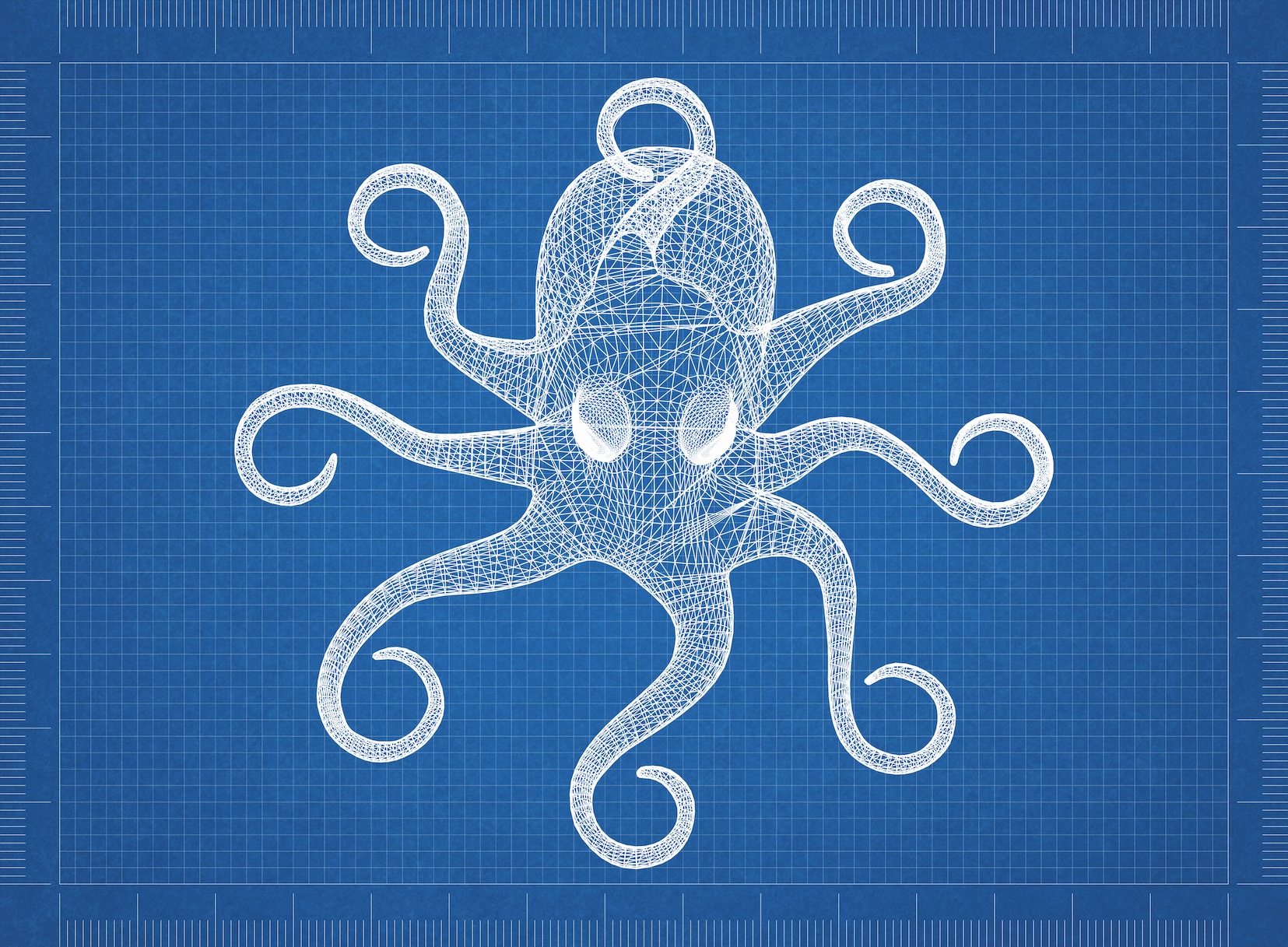
Nature already runs this play in the mighty octopus. The octopus distributes capability through its arms, using an astonishing nine brains – while a coordinating nerve ring keeps its whole body in rhythm. The arms might be performing their own tasks, but when a shark approaches, they synchronize in a flash to jet away.
Lessons from nature’s smartest cephalopod
While many companies have flattened org charts and sped-up projects, actions still funnel through rigid, centralized decision-making processes and end up in bottlenecks. Teams sprint, then stop. Projects begin to take shape, then headquarters puts on the brakes, and momentum quickly fades.
An octopus management model fixes this rhythm. In an octopus-inspired organization, intelligence lives everywhere, so those on top can focus on principles and aims. While decentralization has long been preached, AI finally makes it practical, by transforming streams of often-unstructured data into insights that can inform the right teams at the right times and places.
Here’s what building an octopus organization means in practice.
1. Shift the gravity of decisions to the edges of your organization
Your frontline teams may be at the edges of your company, but they’re the first to see customers and the first to tackle tasks. Equip them with real-time data so they can resolve issues on the spot, rather than being caught in a “wait for the boss” gridlock.
In turn, those at the center of your organization will focus on what’s really important: setting goals, maintaining standards, and ending conflicts quickly rather than micromanaging line items.
As AI raises everyone’s field of view by sifting information and providing context, even junior managers can weigh trade-offs that may once have required a phalanx of analysts. Decision latency falls and quality rises.
2. Shift from command chains to data streams
Octopuses can coordinate their arms through communication among them, all without involving the central brain in their heads. Companies can mirror this behavior by using AI to translate signals – from the market up to HQ, or from HQ strategy down to the frontline – into easy-to-understand data streams and language, tailored for every role.
Instead of top-down directives, work in an octopus organization is driven by a small set of shared events and objectives, and updates flow to the people who can take action. Meetings shift from sharing information to making decisions, because the facts and their implications arrive as the work unfolds.
This is how a firm becomes intelligent everywhere, while staying aligned on what matters.
3. Create an RNA layer so that small changes happen fast
When an octopus’s environment changes, it can edit its RNA rapidly – something very few animals can do. This ability, which adjusts what its body is capable of, makes an octopus superadaptable. You can put a Caribbean octopus into the Antarctic, and it’ll do just fine.
Organizations can build their own RNA-like systems to adapt while in motion. Start by assigning a cross-functional team to rewrite rules, workflows, and customer offers in small, reversible steps that are triggered by clear indicators.
This is how a company adapts from within rather than freezing when currents shift.
4. Operate in distinct rhythms for different contexts
An octopus has three hearts, each serving a different purpose. This helps it thrive when conditions change.
Organizations need to do the same to make the most of AI. Most organizations already have a strong Analytic Heart – one that is deliberate and careful. But they also need an Agile Heart when the outlook is uncertain and learnings are emerging. And they need an Aligned Heart to keep people together when events are swirling and change is everywhere.
5. Redefine the work of middle management
Within octopus organizations, the traffic-cop role fades and the editor role rises. Imagine what your middle managers could do if they didn’t have to worry about processing information and other administrative tasks. They’d curate signals for their teams, frame choices, test scenarios, and clarify guardrails that keep their teams’ actions fast and safe.
Making this change restores judgment as the centerpiece of the job and enables middle managers to focus on human relationships, not synthesizing data.
6. Measure the health of the organization, not just the output
The octopus transformation requires new KPIs. Track decision latency at the frontline, the share of routine choices resolved without an escalation, the rework rates after those choices, and the meeting-to-decision ratio inside key flows. These numbers will tell you whether the arms are truly working together.
7. Foster trust in your systems as the speed of change accelerates
Success depends on people believing that your AI-infused systems will help them do their best work. Remember an important fact about the octopus: it’s emotional. Organizations need to be emotional, too.
Plain-English explanations, human reviews of high-impact judgment calls, and personal communication will preserve employee confidence as your business accelerates. And ensure that AI outputs are integrated with workflows that don’t seem alien to your workforce.
Putting it all into motion
The octopus teaches us to decentralize, synchronize and adapt continuously. If your organization can think fast at the frontline, continuously coordinate and change in real time, the future won’t catch you off guard. You’ll be ready for it, and already moving.
Stephen Wunker is managing director of New Markets Advisors. Jonathan Brill is the futurist-in-residence at Amazon and executive director of the Center for Radical Change. They are the authors of AI and the Octopus Organization: Building the Superintelligent Firm (Menlo Park Books)
