
The paradox of experience risks dragging business to the depths

In the modern enterprise, the waters have never looked flatter. The rise of agentic ecosystems – AI systems capable of automating complex, yet predictable, workflows – promises a permanent sea-state of boundless efficiency.
We are witnessing the tokenization of the workforce, where incremental value is measured in LLM tokens rather than human hours. On paper, the ROI is undeniable: the mundane, the routine, the tedious are devolved to machines while our executives think – and thrive.
Yet beneath this serene ocean lurks a threat. The paradox of experience is a riptide that clutches organizations, pulling them under. Even those that survive risk critical damage. As this nasty undercurrent stirs, it renders organizations too intellectually weak to face the gathering storm of complexity.
The paradox is born from a simple trade-off: machines cost less than humans and work faster. Yet as we pursue the agentic at the expense of the analog, we winnow out the entry-level and mid-tier feeder layers of our organizations. These are the traditional training grounds. They are the places where high-potential talent once learned the art of navigation – by making mistakes.
Harvard’s Amy Edmondson framed this as “intelligent failure”: for organizations to become master navigators, they must first allow their people to take wrong turns in uncharted waters. Automate too much of the lower-level work that was once performed by the crew, and the ship is starved of future officers. The pipeline of human judgment lays broken on the seafloor.
The late, great behavioral economist Daniel Kahneman famously posited that intuition is no mystical gift. It is the application of judgment within a deeply understood context. Intuition fails when applied to the unfamiliar. In a world where knowledge is no longer scarce – where any algorithm can retrieve a fact – the only premium is on human discernment.
Remove the opportunity for young leaders to become ‘scarred’ by the business – to miscalculate the winds and sail into squalls – and we create a future where too few command the intuition to steady the ship when the machines fail us.
A seacraft powered entirely by AI is efficient. But it lacks the precious instinct of a captain who can sense the swell of a rogue wave before it appears on the radar. AI is the ultimate exemplar of Kahneman’s System 1 – a rapid, pattern-based calculus. But it lacks System 2 – deliberative, contextual judgment that humans develop through trial and error. Rely too heavily on technology, and we build ships that run on code, not craft.
How do we find safe harbor? To survive the tokenization of industry, organizations must make a counterintuitive move. The war for talent, in its broad, traditional sense, is no longer the priority. We must instead chart a course toward a highly-bounded, selective strategy: protecting a smaller, elite group of high-potentials, ensuring they remain tethered to the analog. These prospective commanders must be given the space to fail, the context to learn – and the experience to lead.
In an automated age, the ultimate competitive advantage is not your tech stack. It is the quality of the judgment that steers it.
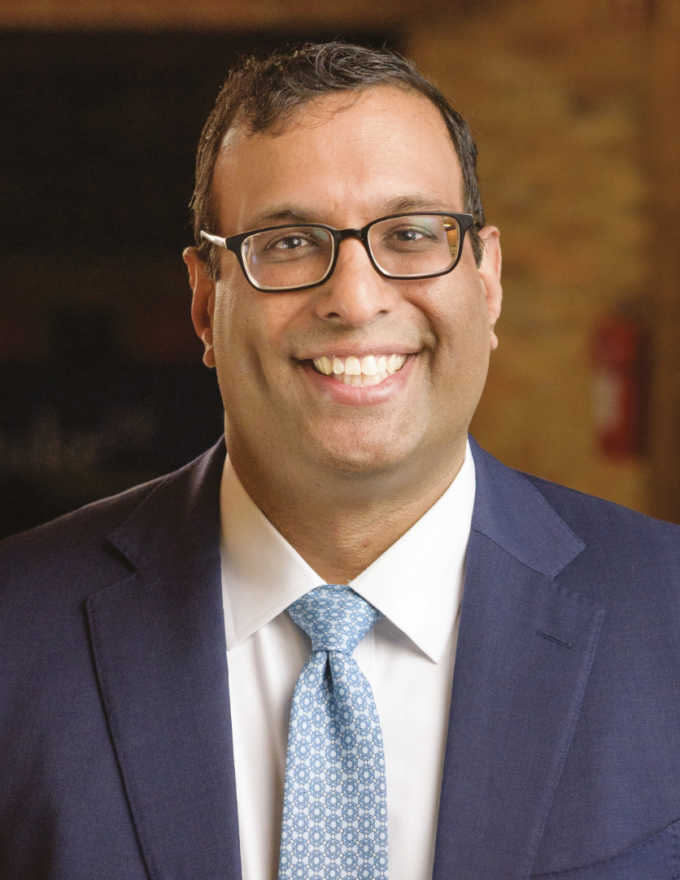
Vishal Patel is president of global markets at Duke Corporate Education
