
The ability to meet changing consumer needs has been central to Minor International’s growth over several decades – and is the key to its future
Writing: Vishal Patel & Patrick Woodman

What drives the sort of leader who embarks on their business career before they’ve even reached adulthood – and who remains deeply involved in their business 60 years on? And how does the required leadership evolve as the organization changes – and new leaders come in to write the next chapter?
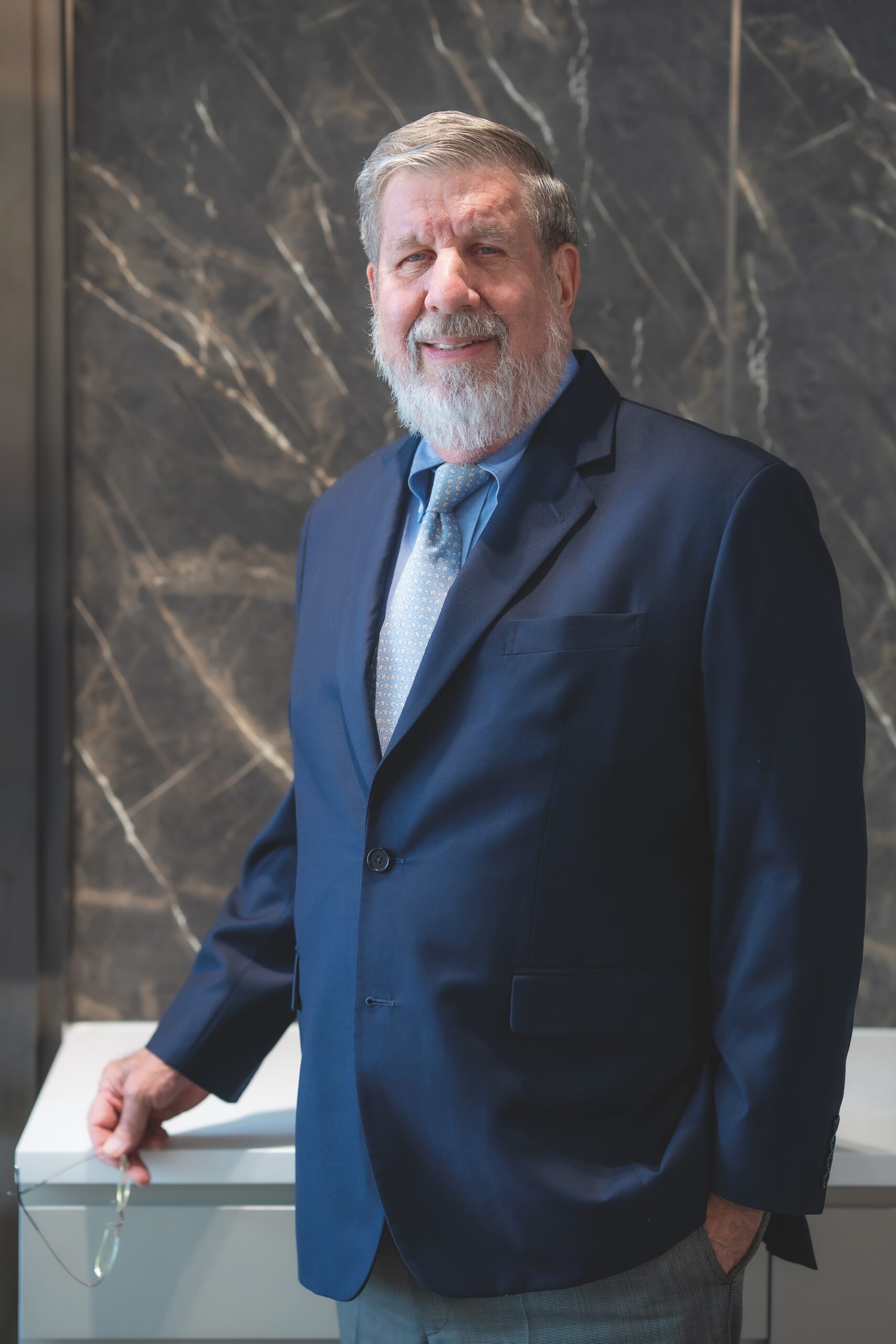
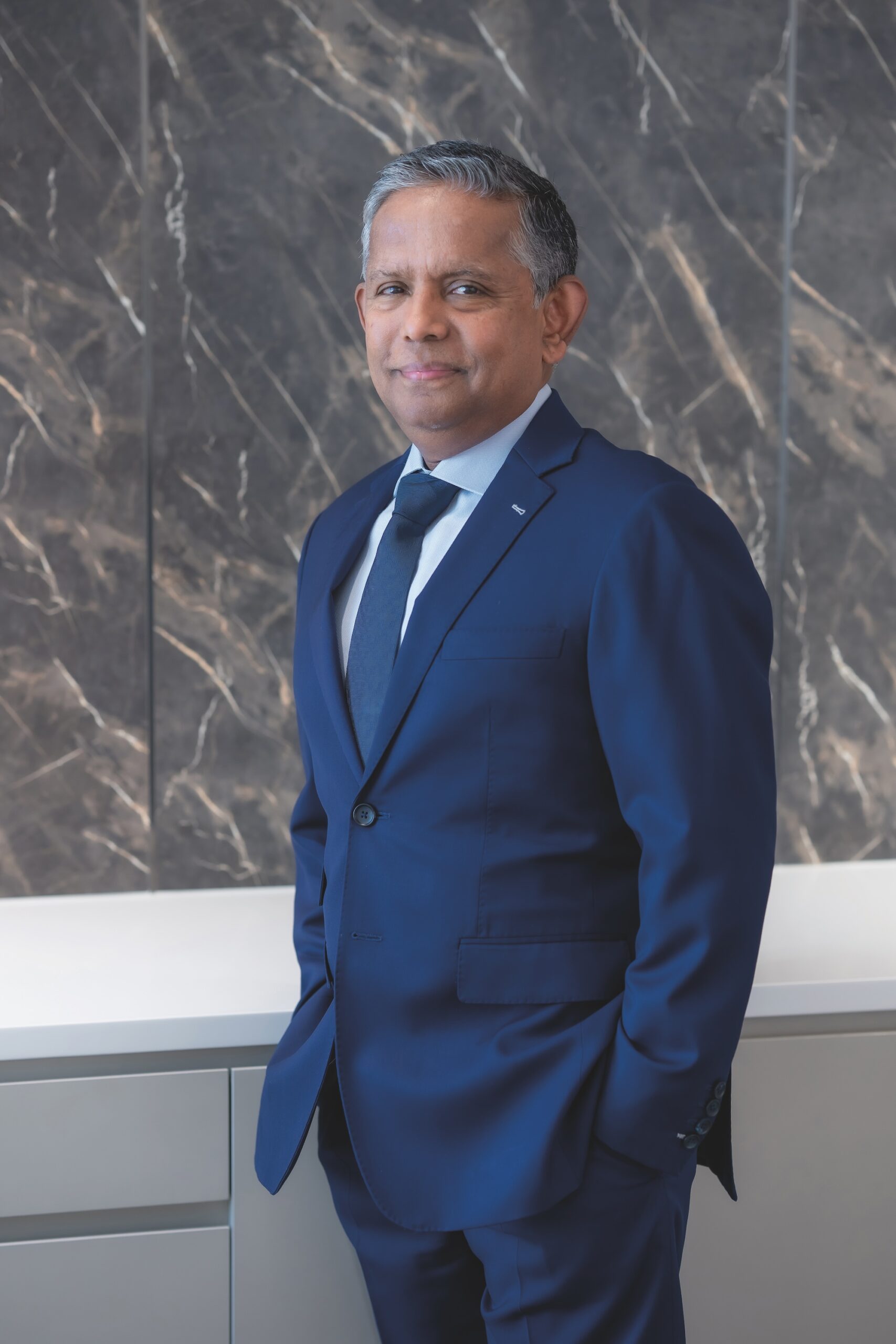
Those questions were at the heart of Dialogue’s recent conversations with two remarkable business leaders: William E Heinecke and Dillip Rajakarier, respectively the founder and chairman, and group CEO, of Minor International – the Bangkok-based multinational group with interests spanning hospitality, restaurants and lifestyle brands.
Entrepreneurial spirit
Born in the US, Heinecke arrived in Thailand aged 14 when his father, a former Marine turned diplomat, moved the family to Bangkok. He started his first company in 1966 aged just 17, focusing on radio advertising and office cleaning, drawing inspiration for the company’s name from his legal status. Minor was born.
Heinecke quickly moved into food, serving the aspirational consumers emerging as Thailand’s economy boomed. “That focus on the consumer was always there,” he recalls. “Even in my advertising days – before I owned restaurants, hotels, or even retail stores – I always had this great belief in life that people are very similar. Teenagers in Asia were no different than teenagers in America – it was just a question of how much money they had in their pocket.”
One of Heinecke’s signature moves was bringing winning brands to the Thai market – such as the Minneapolis-based Mister Donut, which he had noticed succeeding in Japan. “You start with the basis that people are more similar than dissimilar,” he explains. “From music and movies, to food, cars, cosmetics, fashion – anything you want to name. The only thing where you can get it wrong is you can be too early sometimes, and the purchasing power isn’t there.”
Insight is not the same as a long-term strategy, though. Heinecke’s goals were primarily personal and short-term. “You don’t start out with a five-year plan. All I really wanted to do was survive and be able to indulge my hobbies – my go-karts, motorcycles, and cars – so you go step by step,” he explains. The future was unknowable – and would have been scarcely believable. “When we opened our first restaurant, if you’d told me that we’d have a few thousand restaurants 30 years down the line, I wouldn’t have believed you.”
Fortune favors the bold
Some steps were lucky, he admits. Opening pizza restaurants was riskier than he realized: many Thai people are lactose intolerant. Yet a strong sharing culture around food meant it quickly became popular. Fortune also played a part in the move into hotels. “We bought a hotel with the idea of selling it – and then we couldn’t sell it. So by default, we were in the hotel business.”
There was much to learn. “I discovered that hotels are much more capital intensive than restaurants, and require much longer-term thinking,” says Heinecke.
Cash from his restaurants kept the fledgling hotel business afloat as he found his feet. “We found that things weren’t that dissimilar after all. You have to give good service and you have to be reasonably priced.”
It’s a reminder that a thriving business empire can be built opportunistically. “It all starts with that very first brick you put into a wall,” reflects Heinecke. “Finally, you look back and think – geez, you’ve got a wall with thousands of bricks in it! But it all starts with that one brick.”
An enduring outlook
As Heinecke’s portfolio grew, what were the unifying threads running through his leadership? “People, profit, passion – they’re the three Ps I always talk about. If we don’t make a profit, we can’t give back. It’s not a dirty word for me. It’s what allows me to give more back.”
His risk-taking, pioneering spirit continues to shine – and it’s embedded in the company he’s built. “There’s an entrepreneurial spirit – call it boldness or bravery, or whatever. We always thought: ‘Why can’t we do it?’ If we didn’t have the money, that was one thing. But if it was within our range, then we’d want to do it.”
That restless impulse remains central to Heinecke’s leadership philosophy. “We had a culture that was often referred to as a drive culture. If I’m anything, I’m impatient – so when we get onto a good thing, we can move very quickly.”
By the late 1990s, Heinecke was being profiled in the business press with an estimated $100 million fortune – inaccurately, he says – yet a shock was about to unfold. In 1997, the Thai baht crisis hit when the currency floated and promptly tanked, losing half its value. Thailand was plunged into recession and turmoil followed across Asia.
Minor was directly affected. “Our interest rates shot up to 25%,” recalls Heinecke. “I counted up my position and figured I was worth minus $25 million. We’d built hotels on dollar loans, because there was no long-term baht money market in those days. Suddenly your assets had halved and your debts had doubled. That was a pretty awe-inspiring, come-to-Jesus moment.”
Yet the company survived – and came out the other side stronger for it. The ability to move fast has proved invaluable time and again. “Change can happen awfully quickly,” he observes. “Every time we face a crisis as a company, we react and pivot very quickly – whether it’s Covid, SARS, the tsunami, or any of the other crises we’ve been through.”
Maintaining that capability is a priority. “The role of the founder is to continue to make sure that spirit continues – and hopefully you’ve got people who will take the reins and keep it going.”
Designed for speed
The person who has taken the reins in recent years is Rajakarier. The Sri Lanka-born executive joined in 2007, having held the post of deputy CFO at Orient Express – at a time when few outside Asia had heard of Minor. His former boss was skeptical, recounts Rajakarier. “He said, ‘Look at Minor – no one knows this company.’ I said to him, ‘I hope one day I can make Minor as good as Orient Express.’ He laughed.” A few years later, Minor’s share price had overtaken his former employer’s. Rajakarier had the utmost respect for his former boss, but felt compelled to send him a printout of the two share values, without comment. A simple note came back: “I knew you could do it.”
Secrets of success
What has underpinned that success? A key element has been adhering to a simple, streamlined organizational structure. Where larger rivals are slowed by layered hierarchies, Minor moves fast, says Rajakarier. “We only have three layers in the company,” he notes. Lean regional teams holding full P&L responsibility sit between a small corporate center and individual hotels. The structure has enabled Minor to grow without being dragged down by overburdening bureaucracy – while maintaining crucial local connections. “They’re very close to the hotel. They know exactly what’s happening,” he explains.
Knowing exactly what’s happening is something that could be said of Rajakarier too – especially when it comes to his analysis of the evolving opportunities and challenges of serving demanding consumers in the luxury market.
He points to the Anantara brand – a number of whose luxury hotels have featured in the HBO series The White Lotus. Launched in 2000, Anantara was positioned as a luxury offering from the outset, giving it an advantage over mid-market competitors attempting to move up the value chain. “It’s very, very difficult to float upwards, because you don’t understand luxury. It’s easier to float downwards – and when we do that, we carry the luxury mindset with us.”
Giving customers authentic experiences is key. “Anantara here is going to feel different – it’s very Thai,” explains Rajakarier. “In the Maldives, it’s very Maldivian. In the Middle East it’s very Middle Eastern. It’s not a cookie-cutter approach.”
That has been institutionalized through the use of local architects, local guest amenities, and local identities across the company’s hotel portfolio. There are minimum brand standards – but above that threshold, each general manager is encouraged to think and act like an owner. “Our hotels are run with an entrepreneurial spirit. The GM takes ownership and accountability – all corporate is doing is supporting them.” This is Minor’s original entrepreneurial spirit in action.
And the focus remains on the customer, just as it was when the company was founded. “If a guest can say, ‘I stayed at this Anantara and this is what they did’ – that word of mouth is more than enough for us,” reflects Rajakarier.
Building the future
Minor may be entering its seventh decade but speak to Heinecke and Rajakarier and there is no sense that the company is slowing down – far from it. One of the most consequential moves in recent years was the 2018 acquisition of Madrid-based NH Hotel Group, now known as Minor Hotels Europe and Americas. Today, Minor is working on a $1 billion real-estate investment trust in Singapore, due to launch later in 2026, and pursuing the goal of increasing its hotel portfolio to 850 by 2027 – and over 1,000 by 2030.
Given the respective tenures of the founder and CEO, the question of succession is a natural one to raise. It’s the topic that Heinecke says he gets asked about most often – and the one he worries about least. “I sit there smiling because we’ve got such great bench strength – we’ve got at least three or four people who can run this company,” he says. Going outside the organization would risk diluting the culture, he points out.
Indeed, ensuring continuity is a priority across the business, given the pace of growth. Heinecke recognizes the need to support the company’s emerging leaders as well as integrating new talent. “The company is still growing so quickly – not everybody grows at the same speed. You can have great people but then find that the company’s grown faster than they have. You’ve got to be in a position to evolve as the challenges get greater.”
That has shaped Minor’s approach to its many acquisitions over the years – often opting to keep high-performing acquired teams in place. It has helped Minor avoid the classic pitfalls inherent in M&A, says Rajakarier. “Most companies don’t die of starvation – cash is something you can find. Most companies die of indigestion; they cannot integrate.”
When Minor took over NH Hotel Group, Rajakarier met the then-CEO. “He asked, ‘What do you want to do? How many board meetings do you want?’ And I said, ‘No, I’m not running the company. You’re running the company. We’re here to support you.’” The result: Minor Hotels Europe and Americas’ EBITDA has grown from €264 million at acquisition to €425 million.
Heinecke believes such growth will lead investors to reappraise Minor’s value. “We’re a $4 to $5 billion company, and we’ve been that for several years. My view is that we are a $10 billion company – unfortunately, the market doesn’t recognize it. My job is to make sure they do.”
Given his and Rajakarier’s track record, it would probably be unwise to bet against Heinecke succeeding.
Vishal Patel is president of global markets at Duke Corporate Education. Patrick Woodman is editor of Dialogue
