
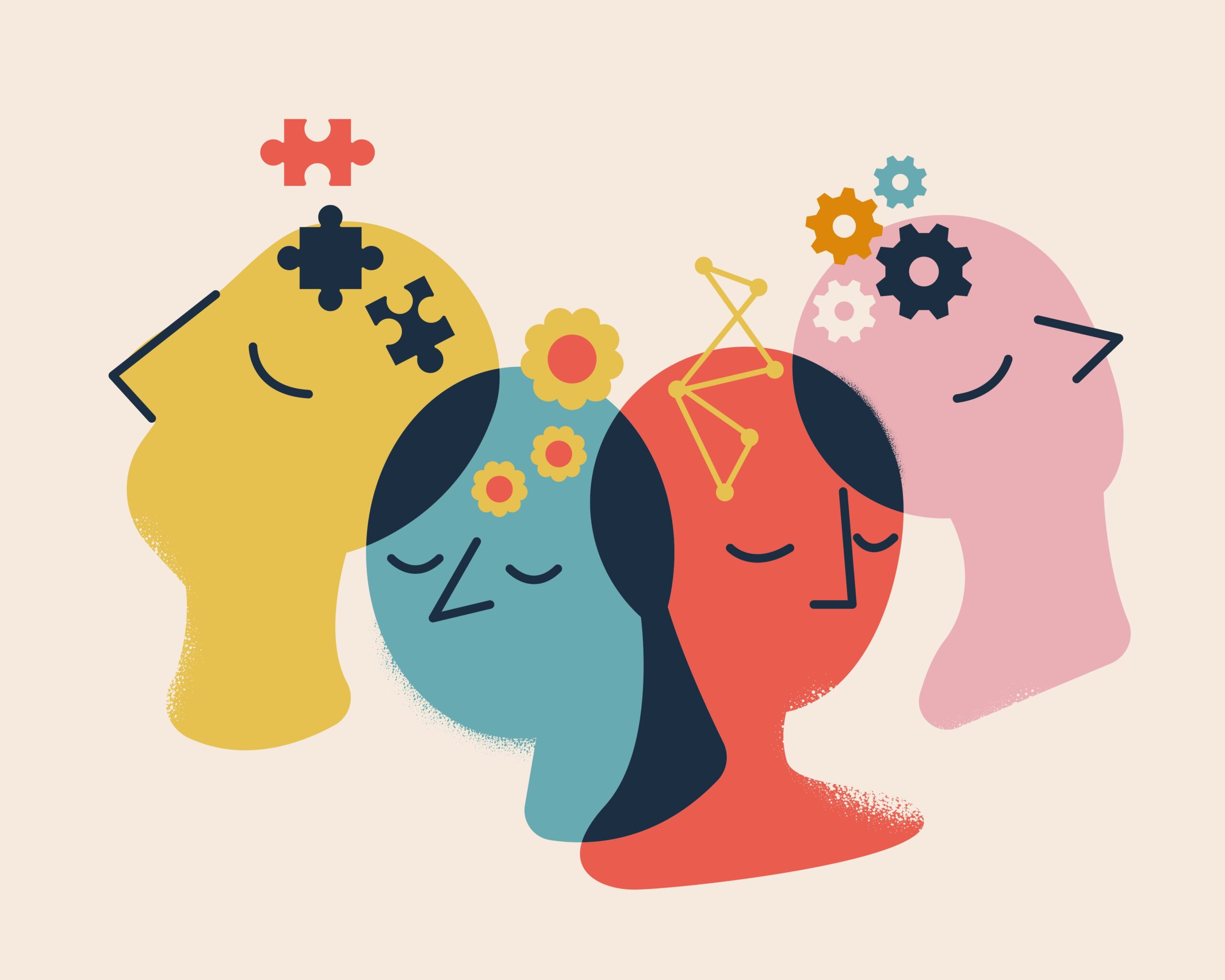
The future will be built through our shared efforts

Make no mistake: businesses face one of the most turbulent periods of destabilization, disruption and upheaval imaginable. The effects of AI’s rise are surely set to surpass those of the arrival of the internet in recent decades, or of the personal computer in a previous generation of change. We are in the early phases of the biggest redefinition of intelligence since the Enlightenment. Not only is AI progressing at incredible pace: we are witnessing the emergence of quantum computing, leaps forward in bio-engineering, the creation of autonomous systems, and the creation of new models for human-machine collaboration.
The consequence is that a new architecture of thought is emerging. We’re no longer in a world where intelligence belongs to one person, to a particular discipline, or to exalted institutions. Intelligence is becoming more diffuse and more distributed. Value will lie in the connections built between different sources of intelligence – which creates vast challenges for leaders. How do we become more connected across organizations, and more connected within organizations?
As we grapple with that challenge, we must engage with another critical dimension of change: the demographic shifts that are rewiring economies around the world. Even as the populations of advanced economies age, emerging economies are bursting with young talent. We are witnessing the emergence of the five-generation workplace – giving today’s organizations historically unique access to talent from across generations. But how will we use it?
In this new world, value is not captured by the smartest person in the room. It is the product of collaboration among the people who build the strongest connections and pool their intelligence – human and technological – in creative new arrangements. This is the new frontier of leadership. AI isn’t the story. We are. The defining challenge of our era is how we build and master the wisdom to marshal this new tool.
Why adaptability is imperative
One of the biggest risks facing leaders is the temptation to hold fast to old frameworks and models about knowledge and power. The ways we used to do things just won’t work for the future. The problem is, change can be scary – and the nature of human psychology is such that when we’re confronted by perceived threats, we tend to fall back on familiar ways of doing things. But yesterday’s tried-and-tested strategies won’t cut it when all else around us is in flux.
As change gathers pace, a new dynamic will be to the fore: the adaptability quotient. Being willing, ready and able to adapt quickly to new circumstances is now a critical capability for all leaders. Take a moment to consider these questions – and answer them honestly. How readily do you embrace new sources of insight and intelligence? How ready are you to pivot strategy and re-engineer your delivery models? How comfortable are you with admitting that your old ways of thinking may be obsolete and that new framings are essential for solving the problems we face?
The reality is that human nature pitches us instinctively against today’s relentless change. We tend to perceive change as a threat – and when faced by threats, we default to well-learned responses. It’s a survival short-cut: we focus on the immediate danger and fall back on tried-and-trusted techniques to dodge or overcome whatever is coming at us. However, this involves a degree of rigidity: by narrowing our attention, our ability to be flexible is reduced. And in a dynamic environment like today’s, where change is multi-faceted and all around us, that’s maladaptive. It’s not the way that leaders will thrive – or even survive – the new context.
We already see the reality of how the world has changed. The world is more deeply interconnected than ever. Entire markets can go terribly wrong because of one small mistake. That puts an onus on organizations to leverage their collective intelligence to the maximum extent possible.
The systems that leaders build must be diverse by design, bringing together multiple perspectives, experiences and sets of knowledge and skills. We cannot rely on a single source of knowledge; the stakes are too high. No one mind can solve the complex challenges that our organizations face.
This new paradigm means combining diverse human and technological systems, because this is the new source of advantage. The new neural network of the organization is both human and technological, and it is constantly evolving – learning continuously, becoming better able to solve the complex challenges that confront us.
It also means bringing together humanity’s full diversity. For many leaders, attention needs to turn to a sometimes overlooked and misunderstood dimension of change: the rise of the five-generation workforce.
The multigenerational opportunity
The global workforce is undergoing one of the most consequential shifts in modern history. For the first time, as many as five generations are working side by side – and how leaders respond will shape not only organizational performance, but long-term economic growth. Research by the World Economic Forum, AARP and the OECD suggests that investing intentionally in multigenerational workforces could raise GDP per capita by nearly 19% over the next three decades.
This demographic reality makes one leadership capability more important than all others: the ability to cultivate collective intelligence.
It starts with inclusiveness. This is not a moral aspiration alone; it is a strategic necessity. When leaders sideline any generational cohort, they cut themselves off from irreplaceable sources of insight, experience and creativity. Maximizing the quality of organizational thinking requires deliberately bringing the broadest possible range of perspectives into the room. We make mistakes when we amplify biases, accelerate inequality, or concentrate on the power of a certain group. Age-related differences need to be considered in the ways we bring teams together, how we create psychological safety so that everyone contributes their ideas, and how we build connection between diverse team members.
While some analysts home in on the challenges of aging societies or the considerable risks of youth unemployment, leaders should focus on the rich opportunities offered by the multigenerational workplace. To seize the moment, we need balance and integration: we mustn’t focus only on one generation or another. Gen Z may bring digital fluency, speed, and a readiness to reimagine the world – but these strengths reach their full potential only when combined with the judgment, pattern recognition and contextual understanding that older generations have developed over time.
I see this dynamic play out vividly in my own life. I treasure my conversations with my nephew. Not only am I struck by how smart he is, and how deeply he understands technology. What is so brilliant is that we challenge each other’s views and ideas – robustly, but respectfully. These exchanges sharpen thinking on both sides – and reveal what becomes possible when organizations design for intergenerational dialogue rather than hierarchy.
Combined with the technological revolution, the rise of the multigenerational workforce is fundamentally transforming how we learn, how we innovate and how we lead. It will require us all to think differently.
Ethics are everything
Inclusion is also essential to ensure organizations don’t fall foul of the ethical quandaries that emerge amid fast-moving, technologically-driven change. Collective intelligence is not only a performance advantage – it is also a moral safeguard.
Discussions of ethics in the age of AI often default to technological fixes. Yes, it is important to guard against bias in datasets and in how AI is trained, and to monitor and correct for emerging bias in how systems operate once deployed. But ethical business practice can’t be guaranteed by algorithms. Our ethics need to include the machines we now work with, but morality cannot be outsourced to AI.
Rather, an ethical approach relies on the foundation of our fundamentally human values. We need to be clear about what those values are and what they mean.
We need to engage everyone across the organization, too. That means ensuring that our collective ethics are brought to life every day through decisions, behaviors and systems – and that a plurality of voices are heard in honest discussions about nuanced ethical questions. Leaders need to be open to varied perspectives and comfortable with being challenged about how they enact shared values. Uncomfortable though this may be, it is the only way to find the right path through complex and finely-balanced situations.
Ultimately, our direction will be determined by human wisdom – by kindness, care for others, and the quality of our collective judgment. While some leaders obsess about seizing advantage by being first to deploy AI, the real story is that kindness, care and collective intelligence will win the race.
Questions for leaders
As leaders set out to build collective intelligence, start with these questions.
1. Are we genuinely designing the organization for collective intelligence? Too many organizations are still optimizing for efficiency at the expense of insight, inclusion and adaptability. Reflect on whether organizational structures, processes and culture support collective intelligence, or remain oriented toward other goals. Creating the future means reorienting toward collective intelligence, developing the organizational muscle needed to reimagine the business and innovate around complex challenges.
2. Are we building our collective adaptability quotient? Relentless change will lead to old markets shrinking and new markets emerging as customers’ needs are transformed. Is your organization ready to jettison its old proposition and seize new opportunities? How will it reimagine its enduring purpose for a new era? How will it re-engineer its structures and processes, and build the culture needed to adapt at pace?
3. What intelligence are we failing to use? Assess whether certain groups – be they generational cohorts, women, or other social groups – are being left out of the conversations that matter. How can more people be brought into the room for the discussions that matter? And are you seizing every opportunity to complement and expand human intelligence with machine intelligence?
4. How do we seize the learning opportunity? Continual change demands continuous learning – a crucial foundation for building adaptability. How is your organization supporting people to level-up their learning and refresh their skills, at a faster pace than ever before? Pause to think too about your own learning and how you can prepare personally for a fast-changing world. Adaptability is a critical leadership competence, as well as an organizational capability.
5. How do we exert a positive influence on society’s direction? Organizational leaders have the opportunity and responsibility to influence change beyond the borders of their organizations. Speaking up as society debates how it will adapt to the rise of AI, and managing the transformational impact on economies and communities, will be vital to ensure fairness, inclusion and sustainability.
Pioneering the new frontier, together
As the AI revolution gathers pace, it can feel like our future is being defined by a small handful of uniquely powerful individuals – the Sam Altmans, Elon Musks or Jensen Huangs of this new world. Their contributions will be pivotal. Yet the truth is that the change now under way is bigger than any one individual or even any one organization.
The change before us is collective; the response will be collective. Across generations, across our organizations, and across societies, we are embarking on a journey that will ultimately transform our thinking about the world. It will give us a renewed sense of identity and purpose; a new understanding of our role in the world – both individually and collectively.
The future will not be shaped by any one generation, leader or technology. It will be shaped by how well we think, learn and act together.
The future belongs to all of us – and it will be defined by our collective intelligence.
Dr Sharmla Chetty is CEO of Duke Corporate Education
