
Leaders build resilience by layering new capabilities on top of their existing expertise

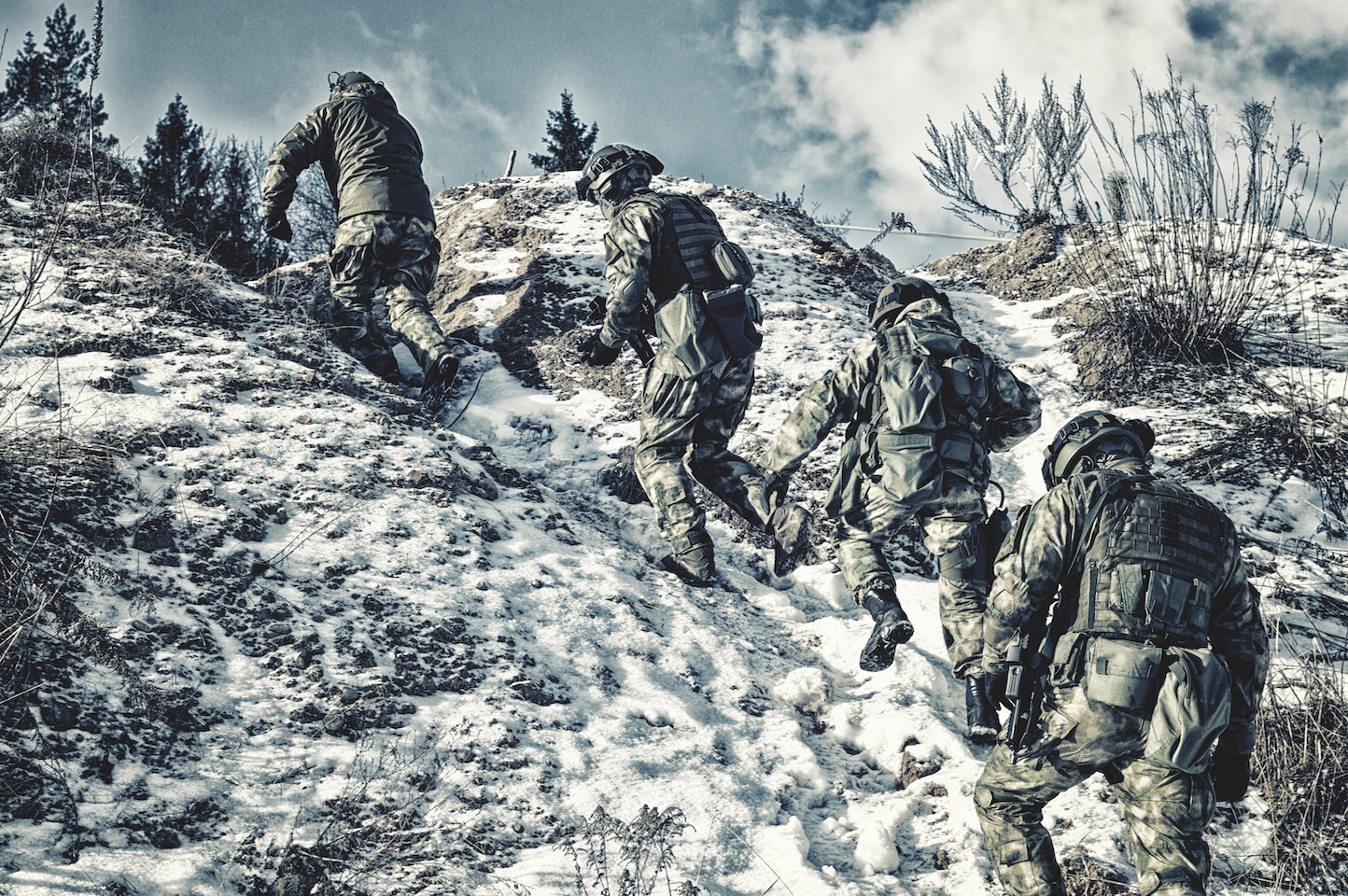
In US Navy Seal training, every conceivable obstacle is presented to force a relentless focus on the objective at hand. They train for success using the crawl, walk, run approach: for example, learning to shoot, then shooting while running, then shooting in total darkness. The idea is simple: develop basic proficiency through repetition, before training in diverse, difficult conditions. This ensures that no amount of confusion distracts from the objective, while allowing the Seals to pivot en route to their goal.
Their example succinctly describes personal resilience. It offers leaders three main lessons for building and sustaining their capacity for handling challenging and unexpected circumstances – a capability that is key to managing complex transitions, and essential for thriving in today’s turbulent business environment.
1. Identify moments of truth
The moment when one transitions to applying known skills and resources in a different situation is a moment of truth. In the case of the Navy Seals, the moment of truth is being able to perform – to shoot – when a situation changes. For the rest of us, our moments of transition and truth present in different ways.
At the personal level, we can follow a few steps to identify moments of transition as moments of truth. First, examine the times in your life when you were productive, fulfilled and alive. What worked for you in those moments? Why did it work, across diverse circumstances? Now, return to what you want to achieve for your future. What would need to be true to realize those ambitions? By answering those questions, you can develop a hypothesis about what actions you might take that may lead to an observable shift in the direction of your objective.
Christine Lagarde, president of the European Central Bank, stands out as a female leader who has applied her skills in diverse circumstances: in government, the private sector and the non-profit sphere. A former member of the French national synchronized swimming team, Lagarde credits the extraordinary degree of discipline and teamwork required by the sport as having informed her leadership style, which she has described as prima inter pares – first among equals. Key characteristics include trying to understand others’ interests, clear communication, and aligning actions to provide a comprehensive response to challenges – evidenced in the way she navigated challenging moments of truth including the 2008 financial crisis, the Eurozone crisis and the Covid-19 pandemic.
2. Craft a powerful narrative
Recognizing the moment of truth is a helpful nudge when our situation changes once – but when our circumstances change multiple times, we need to develop powerful narratives to sustain our ability to act and influence outcomes.
A strong narrative inspires us. It also helps us understand what needs to be different, and why. It creates a frame of reference for taking consistent actions that drive the desired outsized positive effect, while maintaining flexibility
about the exact actions we need to take as our circumstances change.
Elite military services are well known for simple but strong mottos that offer a clear guideline for taking action in the face of adversity. The British Special Air Service (SAS) was founded in the Libyan desert in 1942 to penetrate enemy lines, destroying Nazi planes on their own airstrips and freeing countless Allied prisoners. Its motto, “Who Dares Wins,” focuses on acting with courage and initiative to bring success, with an emphasis on mental and physical resilience, and on adaptability. The SAS prides itself on performing with precision under pressure. The US Navy Seals’ Ethos includes the phrase, “I persevere and thrive on adversity.”
What is your personal narrative for navigating difficult transitions?
3. Balance performance today versus tomorrow
The final lesson from the Seals relates to the power of honing core skills at the same time as layering on new skills – enabling elite performance in changing conditions. This is linked to the idea of habit stacking, where a new way of being is anchored on an existing habit. Small changes, sequenced well, combine to create large shifts.
Being able to sequence the application of our existing skills enables us to drive value in a different context. Former members of the US Navy Seals, for example, often go on to leverage their skills in leadership, discipline and risk management to take on post-military careers in private security, law enforcement, speaking, coaching and entrepreneurship.
In US sports, former NFL quarterback Tom Brady – hailed as the greatest of all time for his playing achievements – has started to win plaudits as a TV analyst, describing how he has built on the skills he honed as a player, while learning new ways to explain game dynamics to network audiences.
Our existing skills can often have significant meaning and value in a different context. Stack new capabilities on top of our existing strengths and we can overcome apparent constraints in unexpected and powerful ways.
Resilience in the face of change
By drawing on concepts from system change, positioning theory in psychology, neuroscience, and strategic foresight, it is possible to build the capacity and capability to thrive in a world where uncertainty and volatility are inherent.
Resilience is ultimately a product of our ability to build capability, create capacity for consistent action, and commit to mastery by layering skills in a range of contexts.
Camelia Ram is a partner at Korn Ferry. She is affiliated with executive education at Duke Corporate Education and EDHEC Business School
